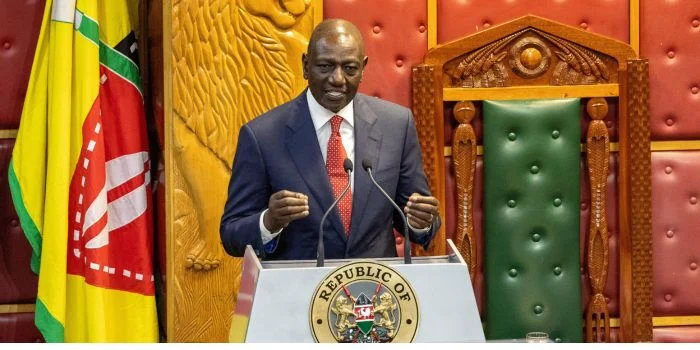
President William Ruto on Saturday escalated the Ruto clergy row, warning religious leaders against allowing churches to be used for political attacks, as tensions between the government and opposition intensify. Speaking in Yala, Siaya County, the President accused opposition figures of turning pulpits into platforms for insults, hate speech, and divisive politics.
His remarks came amid growing criticism from sections of the clergy over recent political exchanges, which religious leaders say have undermined decorum in public discourse. However, Ruto and his allies shifted responsibility back to church leaders, arguing that some religious institutions have enabled toxic political rhetoric.
Ruto clergy row deepens over church platforms
The Ruto clergy row has intensified in recent days following a series of public confrontations between government officials and opposition leaders. Addressing a gathering in Yala, the President urged clergy to safeguard the sanctity of religious spaces.
“I respect our religious leaders, but do not allow the pulpit and the altar to be used for insults, division, and hate among Kenyans,” Ruto said.
He further accused unnamed opposition leaders of using church events to attack his administration, stating that such conduct fuels political tension rather than constructive engagement.
Leaders defend stance amid criticism
Senior government officials echoed the President’s position as the Ruto clergy row widened. National Assembly Majority Leader Kimani Ichung’wah said political exchanges in churches have embarrassed both leaders and religious institutions.
“We are more embarrassed that our archbishops can preside over trading of insults in churches and at the altar,” Ichung’wah said.
At the same time, Minority Leader Junet Mohamed urged politicians to separate political contests from religious gatherings, suggesting that disputes should be addressed in public forums rather than places of worship.
Elsewhere in Bureti, Senate Majority Leader Aaron Cheruiyot criticised what he described as selective condemnation by the clergy. He questioned why religious leaders had remained silent during earlier attacks on the President.
Opposition criticism and political tensions
The Ruto clergy row reflects broader political tensions between the ruling coalition and opposition groups. The President accused his critics of lacking a clear policy agenda and instead relying on personal attacks during rallies.
“They call me names, and when I respond, they say I have no agenda. That is not leadership,” Ruto said.
Political divisions also emerged within opposition ranks. ODM National Chairperson Gladys Wanga warned against interference in party affairs, while Alego Usonga MP Samuel Atandi signaled possible leadership changes in Siaya County.
Development agenda continues amid dispute
Despite the ongoing Ruto clergy row, the President proceeded with official engagements, including the launch of an affordable housing project in Yala valued at Ksh800 million. The project forms part of the government’s broader housing initiative aimed at increasing access to affordable homes.
Observers note that development activities continue alongside political disputes, highlighting the dual focus of the administration on governance and political positioning.
Outlook as Ruto clergy row persists
The Ruto clergy row is expected to remain a key issue as political rhetoric intensifies ahead of future electoral cycles. Analysts say the role of religious institutions in political discourse will likely face increased scrutiny.
For now, both government and opposition leaders appear unwilling to soften their positions, raising concerns about further escalation in public exchanges.
The unfolding dispute underscores the growing intersection between religion and politics in Kenya, with implications for national unity and the tone of public debate.