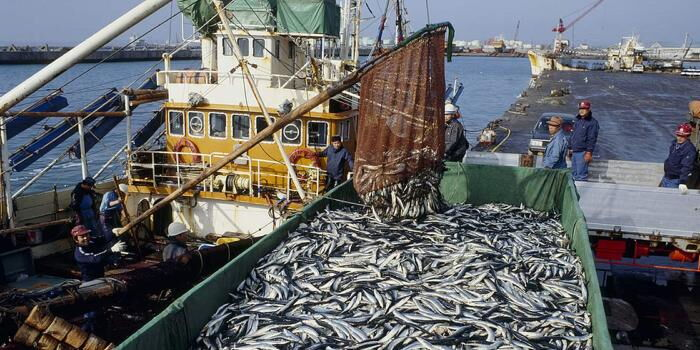
Illegal fishing is facing a tougher international response after Kenya and the United States used the 11th Our Ocean Conference in Mombasa to highlight new pressure on foreign nationals linked to illicit fishing networks.
The United States said it had made the first-ever use of visa restrictions targeting people responsible for, complicit in, facilitating or benefiting from illegal, unreported and unregulated fishing, commonly known as IUU fishing. The announcement came during a major ocean summit hosted in Kenya from June 16 to 18, 2026, where governments, conservation groups, marine experts and private-sector players met to discuss ocean protection, maritime security and sustainable fisheries.
The move is significant because it shifts part of the fight against illegal fishing from patrol boats and port inspections into immigration enforcement. Instead of focusing only on vessels, nets and cargo, the new approach targets the people behind illegal fishing operations: owners, financiers, facilitators, brokers, corrupt officials and other actors who benefit from the trade.
For Kenya, the issue is especially important. The country is positioning itself as a blue economy hub in the Western Indian Ocean, where fisheries, ports, coastal communities, tourism and maritime security are all connected. Hosting the Our Ocean Conference gave Kenya a global platform to push stronger action against fishing crimes that hurt coastal livelihoods and marine ecosystems.
What Was Announced in Mombasa
The U.S. announced more than $96 million in commitments at the 11th Our Ocean Conference, covering maritime security, action against IUU fishing and science-based fisheries management.
A major part of that package is aimed at strengthening the fight against illegal fishing across ocean basins where the practice threatens communities and ecosystems. The U.S. also highlighted its use of visa restrictions as a new enforcement tool against individuals linked to IUU fishing and related activities.
The visa restrictions are designed to send a direct message: people who profit from illegal fishing may face personal consequences, including limits on their ability to travel to the United States.
The move does not replace traditional maritime enforcement. It adds another layer. Governments still need vessel monitoring, port inspections, fisheries data, patrol capacity, prosecutions and regional cooperation. But visa restrictions raise the personal cost for individuals who operate behind corporate structures, false vessel identities or complex ownership chains.
Why Visa Restrictions Matter
Visa restrictions matter because illegal fishing is often driven by networks that cross borders.
A vessel may be registered in one country, owned through a company in another, crewed by workers from several countries, operating in international waters and selling fish through a separate supply chain. This complexity allows bad actors to hide responsibility.
Traditional enforcement can be difficult when vessels change names, switch flags, turn off tracking systems or land catches in weakly monitored ports. Even when a vessel is identified, the people who financed or enabled the operation may remain untouched.
Visa restrictions target individuals rather than only vessels. That makes them useful where direct prosecution is difficult but evidence links people to serious wrongdoing. If a financier, operator or facilitator cannot easily travel, do business or enter major markets, the illegal operation becomes riskier.
This is why the U.S. move is important. It treats illegal fishing not only as an environmental issue, but also as a transnational enforcement and economic security issue.
What Illegal, Unreported and Unregulated Fishing Means
IUU fishing covers three related problems.
Illegal fishing happens when vessels break the law. This can include fishing without a licence, entering protected waters, using banned gear, exceeding quotas, targeting prohibited species or ignoring conservation rules.
Unreported fishing happens when vessels fail to declare catches properly. This may include hiding the true volume of fish caught, misreporting the species, lying about where the catch came from or under-declaring landings to avoid penalties.
Unregulated fishing happens when vessels operate in areas or under flags where rules are weak, unclear or poorly enforced. Some vessels exploit gaps in international oversight, especially in waters beyond national jurisdiction.
Together, these practices damage fish stocks, weaken legal fishing businesses, distort markets and threaten food security.
For coastal countries such as Kenya, IUU fishing can undermine local communities that depend on fisheries for jobs, income and nutrition. It can also reduce government revenue and weaken confidence in legal seafood supply chains.
The Mombasa Declaration Adds Transparency Push
Alongside the U.S. visa action, the Mombasa conference produced a wider transparency push.
Fifteen countries adopted the Mombasa Declaration to strengthen the fight against illegal fishing. The declaration calls for improved access to information on fishing vessels, ownership and licensing, as well as stronger data sharing to track fishing activities and support enforcement.
This is important because transparency is one of the most powerful tools against IUU fishing. Illegal operators often benefit from secrecy. They hide who owns vessels, where vessels are licensed, what fish they catch, where they unload and which companies profit.
Publishing vessel information, fishing authorisations and ownership details makes it harder for rogue operators to disappear into the system. It also helps governments, journalists, conservation groups and buyers identify suspicious patterns.
Transparency does not solve every problem, but it makes enforcement more practical. When the public record is clearer, bad actors have fewer places to hide.
Why Kenya’s Role Matters
Kenya’s role matters because OOC11 was the first Our Ocean Conference hosted on African soil. That placed Africa’s ocean priorities at the centre of global discussion.
Kenya has a long Indian Ocean coastline, important marine ecosystems and coastal communities that depend on fishing, tourism, shipping and small-scale trade. The country also sits near key maritime routes linking Africa, the Middle East and Asia.
By hosting the conference, Kenya positioned itself as a regional voice on ocean governance, blue economy investment and maritime security.
The fight against illegal fishing is directly linked to Kenya’s national interests. Stronger fisheries protection can support local fishers, improve food security, protect marine biodiversity and strengthen coastal economies.
It also fits with Kenya’s wider ambition to grow the blue economy through ports, fisheries, aquaculture, tourism, marine conservation and ocean-based trade.
The Economic Cost of Illegal Fishing
Illegal fishing is not a small problem. It is a multibillion-dollar global crime that affects governments, legal fishing companies and coastal communities.
When illegal vessels take fish without reporting or paying required fees, governments lose revenue. Legal fishers lose income because they must compete against operators who ignore the rules. Consumers may also face higher prices or lower-quality supply chains when fish stocks decline.
The damage is especially severe in developing coastal economies. Many communities depend on fish as a major source of protein and livelihood. When illegal fleets remove large volumes of fish, local fishers may travel farther, spend more on fuel and catch less.
The economic harm also extends to ports, processors, exporters and traders. A damaged fishery can weaken an entire coastal value chain.
That is why stronger enforcement is not only about conservation. It is also about protecting jobs, markets and national economic security.
Why Illegal Fishing Threatens Food Security
Fish is a critical source of food for millions of people. In many coastal and island communities, it is one of the most affordable and accessible sources of animal protein.
Illegal fishing threatens that supply. When fish stocks are overexploited, catches fall. When catches fall, prices can rise. When prices rise, poorer households are hit hardest.
The problem becomes worse when illegal operators target high-value species or fish in breeding grounds. This can weaken future fish populations and reduce long-term productivity.
Food security is therefore one of the strongest arguments for action. Protecting fisheries today helps ensure that future generations can continue to depend on the ocean for nutrition and income.
Why Maritime Security Is Part of the Same Debate
Illegal fishing is often linked to broader maritime security challenges.
Vessels involved in IUU fishing may also be connected to labour abuse, document fraud, smuggling, unsafe working conditions or other illegal activities. Weak oversight at sea can create space for several forms of crime.
This is why maritime security funding matters. Countries need coast guard capacity, vessel monitoring systems, port controls, surveillance technology, intelligence sharing and trained officers.
Kenya and other coastal states cannot fight illegal fishing through policy statements alone. They need the tools to monitor their waters, inspect vessels and cooperate with neighbours.
The U.S. commitments announced at OOC11 are therefore part of a broader effort to strengthen enforcement capacity, not only punish individual offenders.
Countries and Networks Under Scrutiny
The official U.S. statement highlighted foreign nationals involved in IUU fishing and IUU-related activities, but the public material reviewed did not name every country or individual covered by the latest visa action.
That distinction is important. Illegal fishing is a global problem involving vessels, companies and actors from many jurisdictions. Some countries are frequently discussed in international fisheries reports because of distant-water fleets, weak vessel registries, flag-of-convenience issues or enforcement gaps.
However, responsible reporting should avoid treating entire countries as guilty based only on broad claims. The stronger approach is to focus on documented conduct: vessels operating illegally, individuals benefiting from the activity, companies hiding ownership or officials enabling violations.
The visa restrictions appear designed to target specific foreign nationals, not ordinary fishers or entire populations.
Impact on Diplomacy and Trade
The use of visa restrictions could create diplomatic pressure, especially if targeted individuals are linked to companies or officials in countries with strong trade ties to Kenya, the United States or other partners.
Illegal fishing enforcement can be sensitive because it touches trade, sovereignty, maritime rights and national fishing industries. Some governments may reject accusations against their vessels. Others may cooperate to avoid sanctions, reputational damage or market access problems.
For Kenya, the challenge is to support stronger ocean enforcement while maintaining balanced diplomatic relations with major partners. That requires clear evidence, international cooperation and consistent standards.
The issue may also affect seafood trade. Buyers increasingly want proof that fish products are legal, traceable and sustainable. Countries and companies associated with IUU fishing risk losing market confidence.
What This Means for Kenya’s Coast
For Kenyan coastal communities, stronger action against illegal fishing could have practical benefits.
If illegal fishing is reduced, local fish stocks may recover over time. This can support small-scale fishers, improve incomes and strengthen food supply. It may also help protect marine tourism assets such as coral reefs, seagrass beds and coastal biodiversity.
Counties along the coast, including Mombasa, Kilifi, Kwale, Lamu and Tana River, have a direct interest in healthy marine ecosystems. Fishing, tourism, transport and conservation all depend on the condition of the ocean.
The benefits will not appear overnight. Fisheries recovery requires enforcement, community participation, data, habitat protection and responsible local fishing practices. But international action against industrial-scale illegal fishing can reduce one major source of pressure.
What Happens Next
The next stage will be implementation.
Visa restrictions only matter if they are based on strong intelligence and applied consistently. Maritime security funding only matters if it improves real enforcement capacity. Transparency declarations only matter if countries publish useful information and share data.
Governments will need to improve vessel registries, licensing systems, catch documentation and port controls. They will also need to cooperate across borders because illegal fishing networks rarely operate in one country alone.
The Mombasa Declaration gives countries a transparency framework. The U.S. visa restrictions add personal consequences. Kenya’s hosting role gives the issue political visibility.
The challenge now is turning commitments into measurable enforcement.
Conclusion
Kenya and the United States have helped place illegal fishing higher on the global enforcement agenda after the Mombasa-hosted Our Ocean Conference.
The U.S. highlighted the first-ever use of visa restrictions against foreign nationals linked to IUU fishing and related activities, adding a new immigration tool to the fight against illegal fishing networks. The move came alongside more than $96 million in U.S. ocean commitments and wider international support for fisheries transparency.
For Kenya, the announcement strengthens its role as a blue economy and ocean governance leader in Africa. For coastal communities, it offers hope that stronger international action can protect fish stocks, livelihoods and marine ecosystems.
Illegal fishing thrives when vessels, owners and facilitators operate in secrecy. The message from Mombasa is that the world is moving toward more transparency, stronger enforcement and greater personal consequences for those who profit from the destruction of ocean resources.
The success of the initiative will depend on implementation. If governments follow through with data sharing, vessel tracking, port inspections and targeted sanctions, illegal fishing networks may find it harder to operate unnoticed.
Read Also: Kenyans Can Now Download and Print Birth Certificates Online